Georgia State University Library See also recent in ScholarWorks
University Library

Recent Atlanta Research from GSU in ScholarWorks

More in ScholarWorks

digATLThe Digital Atlanta Portal

Projects, collections, and data about the metro area produced by Georgia State University faculty, staff, and students working with and within their communities. More ...

Tag: African Americans

Veiled Visions: The 1906 Race Riot

Tells the story of the 1906 Race Riot, a three-day massacre that spread through Atlanta, starting downtown on Saturday, September 22 and ending with the...
Read More
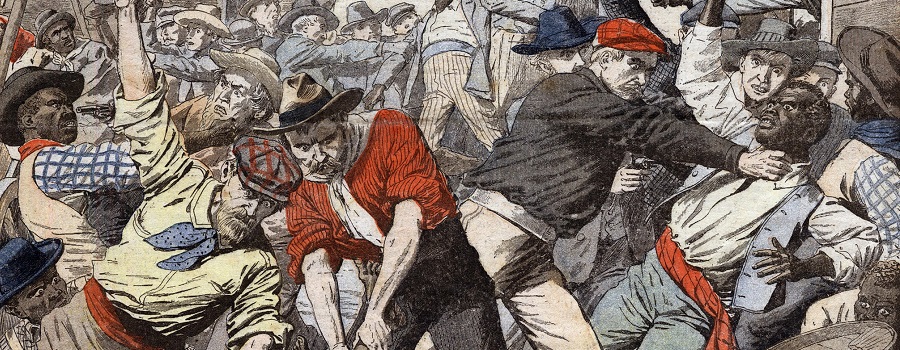
Tells the story of the 1906 Race Riot, a three-day massacre that spread through Atlanta, starting downtown on Saturday, September 22 and ending with the arrest of hundreds of civilians on Tuesday, September 25. The tour, put together by undergraduate students in Georgia State University’s EPIC Project Lab, uses quotations from Veiled Visions: The 1906 Atlanta Race Riot and the Reshaping of American Race Relations by David Fort Godshalk (UNC Press, 2005), a book examining the long-last impact that the riot had on Atlanta and especially on its race relations. Law enforcement agents and government authorities failed dramatically to protect Atlanta’s marginalized and vulnerable citizens. Both the Atlanta Police Department and the Governor’s Mansion stood only a few minutes’ walk from Five Points, where the violence had erupted, yet the police and the governor failed to intervene significantly until lives had already been lost.

Creator
EPIC Project Lab students Pat Barrett, Dionne Clark, Alex Barnett, Aaliyah Brunson, and Chelsea Price; Faculty Advisors Drs. Sara Harwood and Brennan Collins

Pittsburgh Community

National Register Nomination Proposal to preserve the neighborhood known as Pittsburgh, located south of Mechanicsville. This traditionally African American neighborhood is bordered by railroad tracks....
Read More
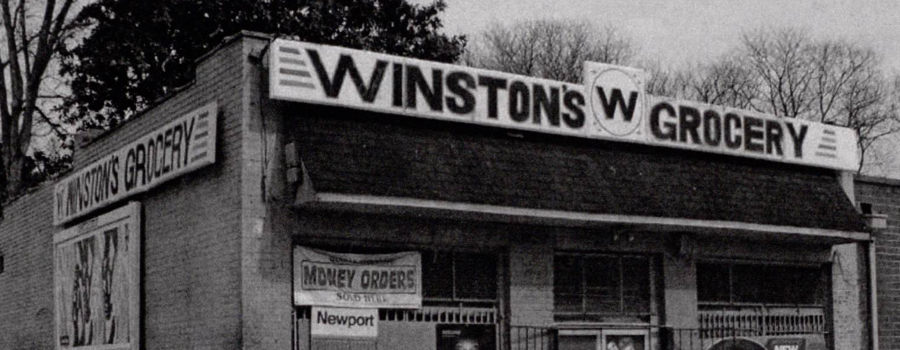
National Register Nomination Proposal to preserve the neighborhood known as Pittsburgh, located south of Mechanicsville. This traditionally African American neighborhood is bordered by railroad tracks. This resource includes a large map as well as various smaller maps, photographs, and primary sources on the area.

Date created:
Spring 2004

Creator
GSU students in History 8700 Case Studies in Historic Preservation Chad Carlson, Sylvia Cleveland, Laura Drummond, Terri Gillett, Jason Hall, Sania Hanafi, Heather Lucas, Penny Luck, Bourke Reeve, and Sharman Southall
Format
Category
Arts & Culture

Once Upon a Time in Atlanta

The purpose of this tour is to have students explore some of the locations on or near GSU’s campus in Raymond Andrews’ memoir Once Upon...
Read More

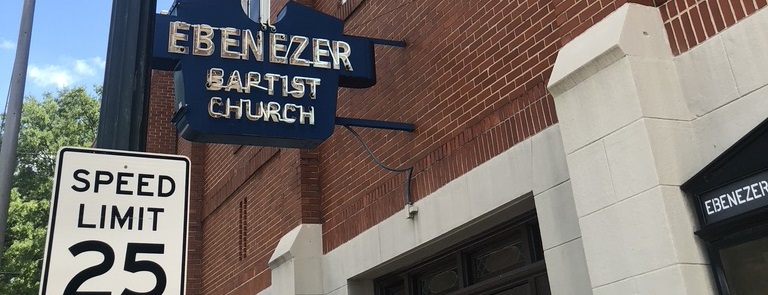
The purpose of this tour is to have students explore some of the locations on or near GSU’s campus in Raymond Andrews’ memoir Once Upon a Time in Atlanta (Chattahoochee Review, v18, n2, 1998) and to provide some information about the Sweet Auburn District, the setting for most of the memoir. The tour is not meant to be an official tour of the Sweet Auburn District.

Raymond Andrews came to Atlanta in 1949, when he was 15 years old, to attend high school and work. While he went to school and worked outside of the neighborhood, Andrews lived in Sweet Auburn. This area was often considered the wealthiest African American business district in the U.S. for much of the early to mid-twentieth century. Andrews was here during the area’s heyday. Sweet Auburn developed after the 1906 Atlanta Race Massacre as black businesses moved out of the more integrated downtown area to avoid growing racial tensions during the rise of the Jim Crow era. For decades, the area was a prosperous foundation for African American business, culture, and leadership. The neighborhood played a significant role in the Civil Rights Movement, and is now home to many historic landmarks.

In the late twentieth century, the Sweet Auburn District faced many economic hardships after an interstate was built dividing the neighborhood, white flight to the suburbs, and the displacement of many African American neighborhoods by Urban Renewal. For the past few decades, the neighborhood has often been listed as one of the most endangered historic places in the country. As GSU grows, our campus has moved increasingly into Sweet Auburn.

Related resource
ATLMaps – https://atlmaps.org

Creator
Faculty Advisor Brennan Collins for his PERS 2002 course at Georgia State University. Parts of the tour were borrowed from the Raymond Andrews map layer from ATLMaps.org created by Ashley Cheyemi McNeil.
Category
Arts & Culture